c6o
A two-era brand and digital system for c6o—first a Buckminster Fuller-inspired private members' club in Ginza, then a warmer public-facing bar supported by a new website and an actively developed members platform.
One Place, Two Distinct Chapters
c6o began as a private members' club in Ginza and later opened its doors to the public. I shaped both chapters: the original identity and members-only digital experience, followed by a warmer rebrand, a new public website, and the foundations of a broader members platform that remains in active development. The challenge was not simply to refresh the visuals. Each era needed to express a different relationship with its audience while still feeling unmistakably c6o.
01 — The Private Members' Club
The original c6o was conceived as a private social club for founders, executives, creatives, and internationally connected people in Tokyo. Its premise drew from Buckminster Fuller's systems-oriented thinking: the club was not just a room or a membership tier, but an environment designed to create useful, unexpected connections between people. I translated that idea into an identity and service ecosystem spanning the website, member communications, events, access, social content, and the physical venue.
Building the Original Identity
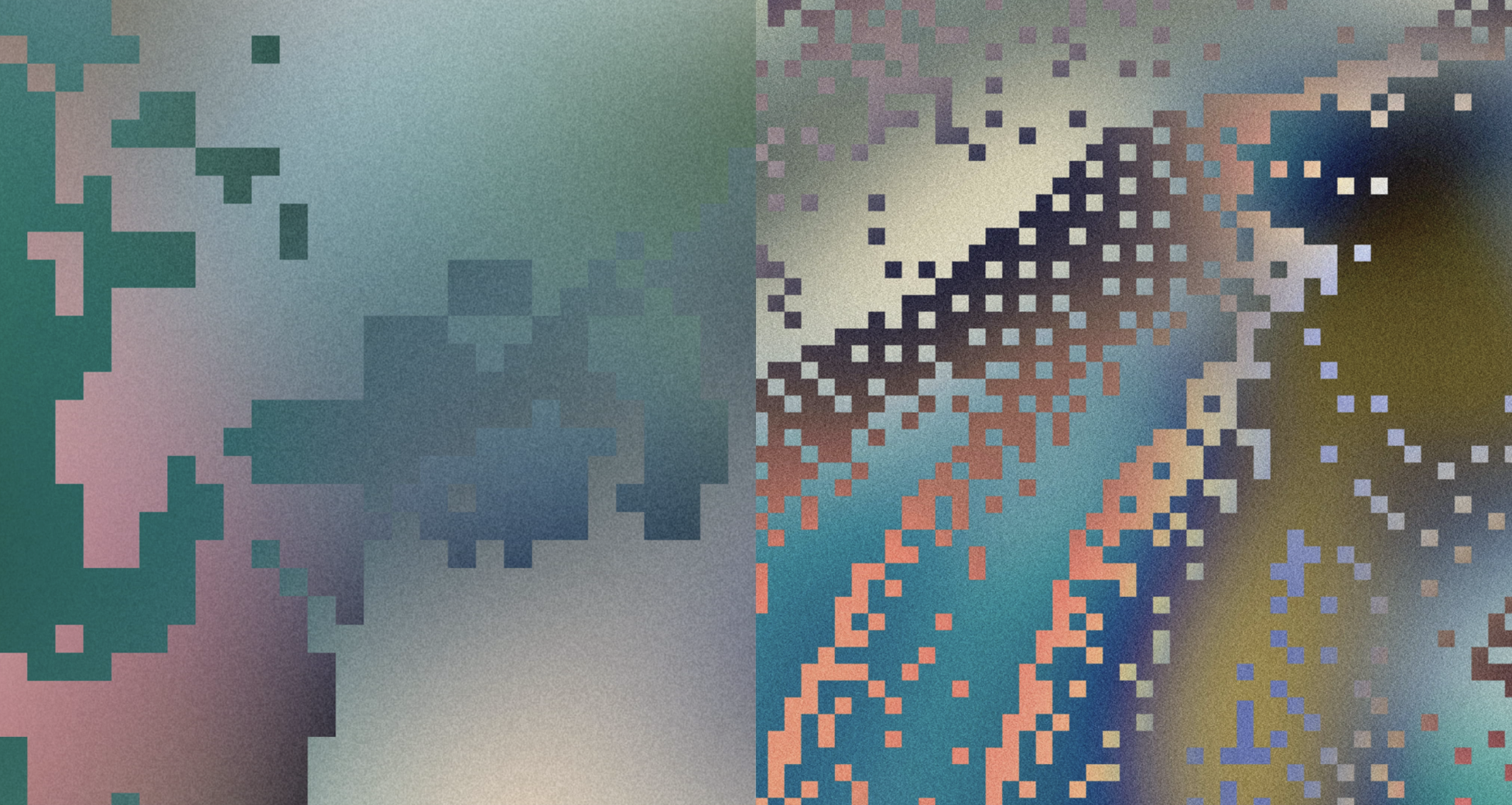
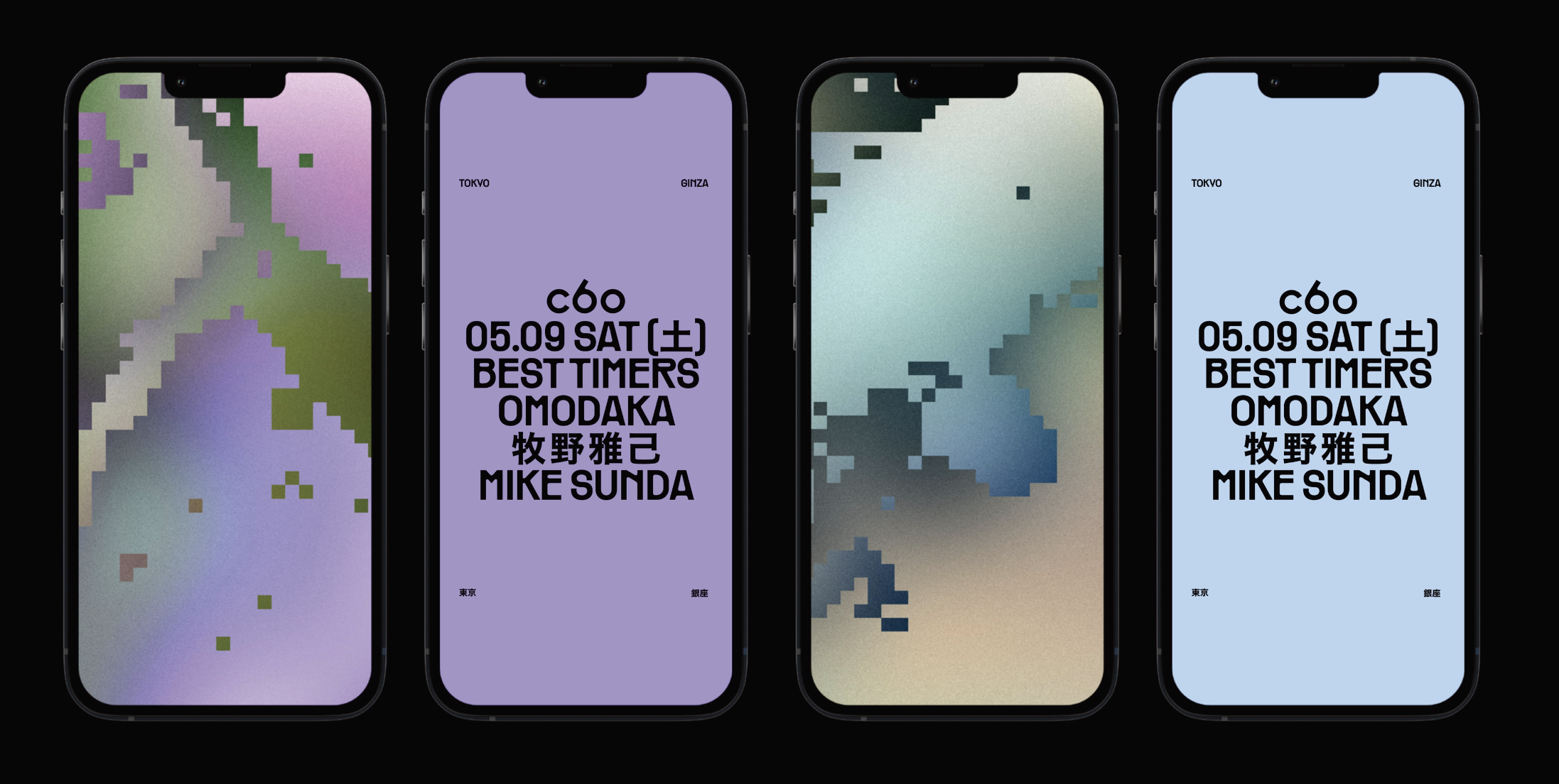
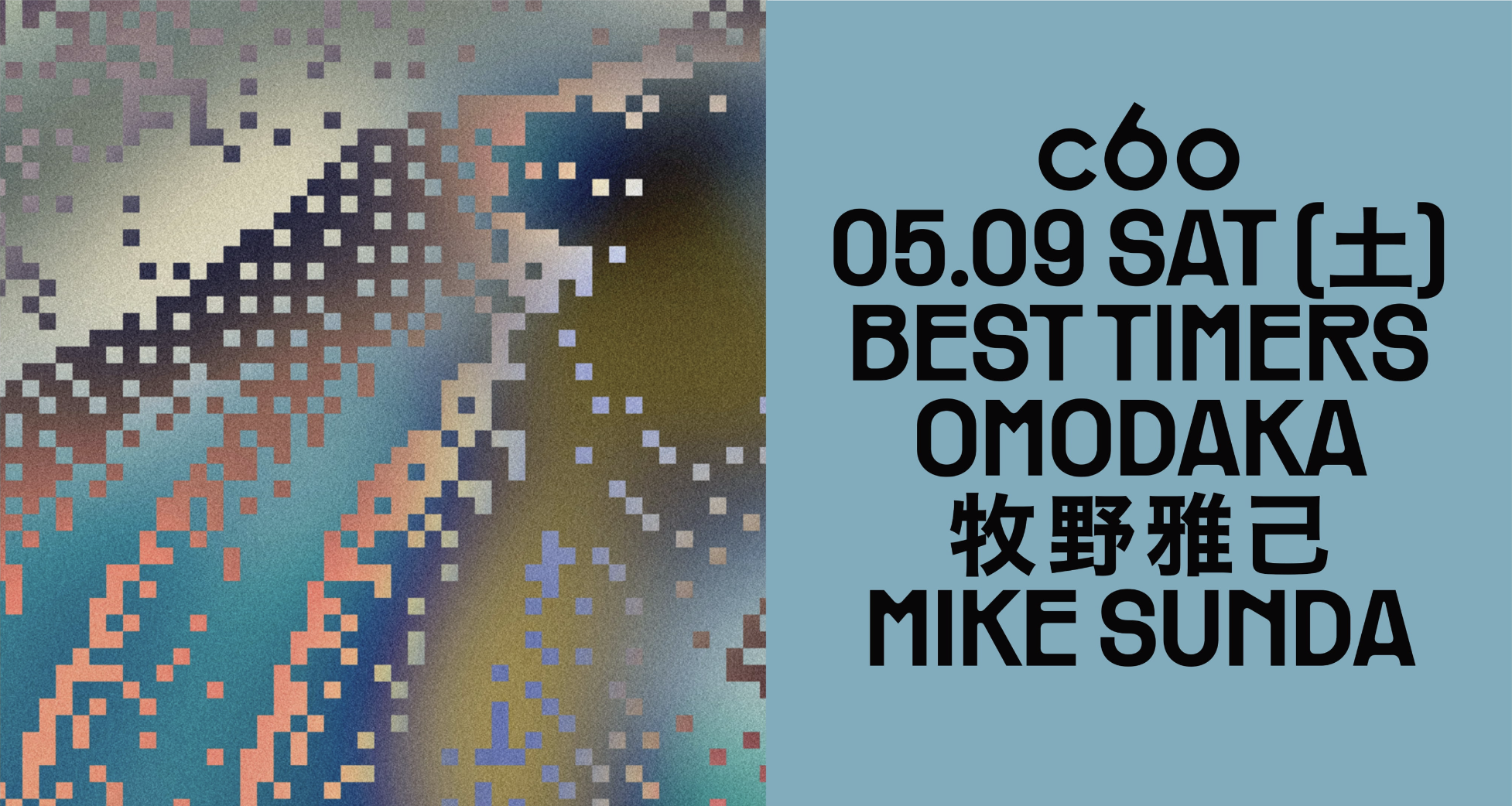
I created a restrained visual system around a monochromatic palette, geometric typography, precise spacing, and material-led imagery. PP Rader, Inter, and Hiragino Sans established a contemporary bilingual foundation, while dimensional graphics, motion, and carefully controlled event color gave the brand room to change without losing its underlying structure. A signature language of pixelated gradients reinterpreted traditional Japanese prints and textures, bringing Ginza’s visual heritage into dialogue with a younger, more digitally native Japan. This balance of tradition and experimentation reflected c6o’s wider ambition: to connect Japan’s next generation of leaders with international members, outside perspectives, and opportunities for lasting collaboration. The result felt private and intellectually curious without relying on familiar luxury tropes.
The Website as an Introduction to the System
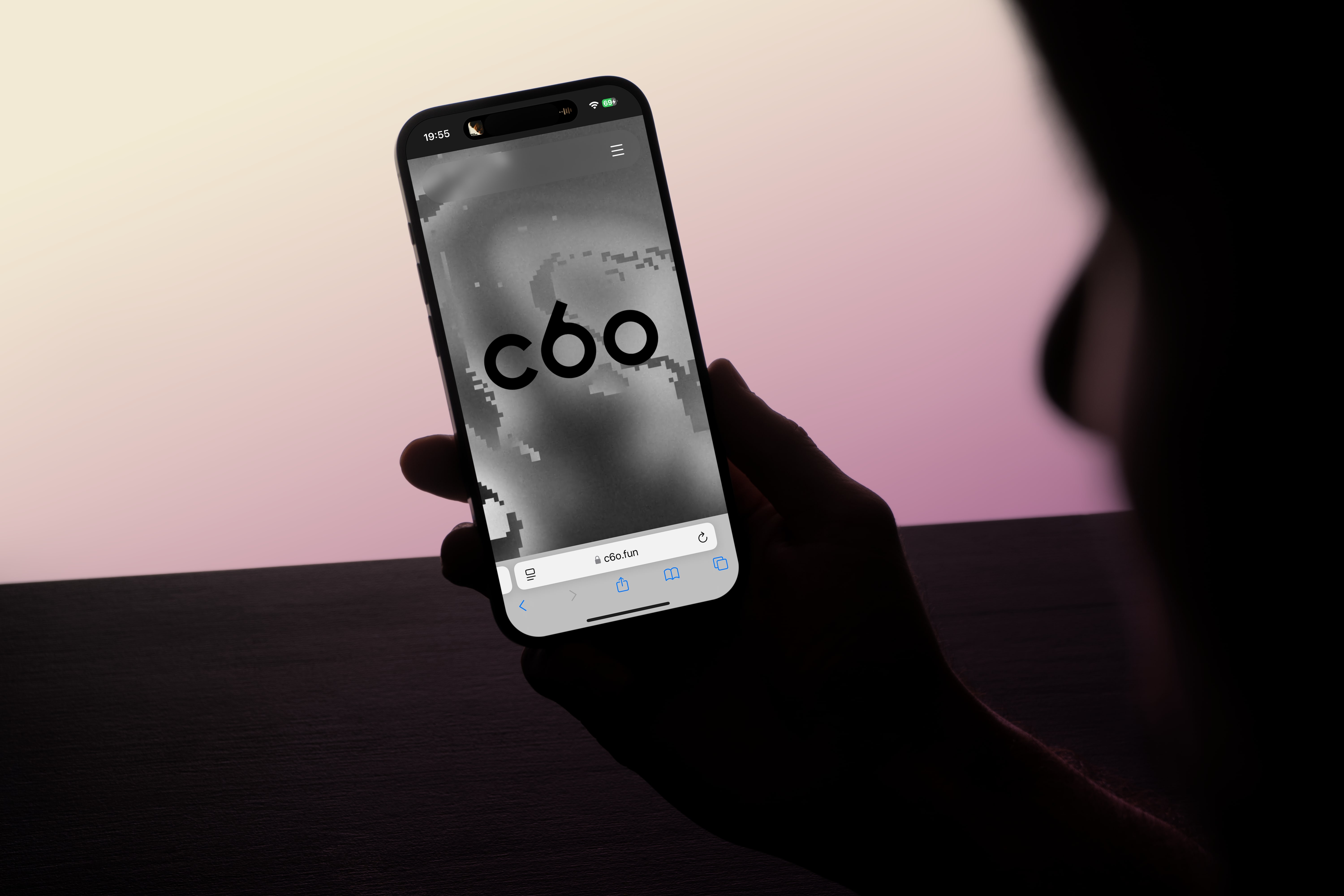
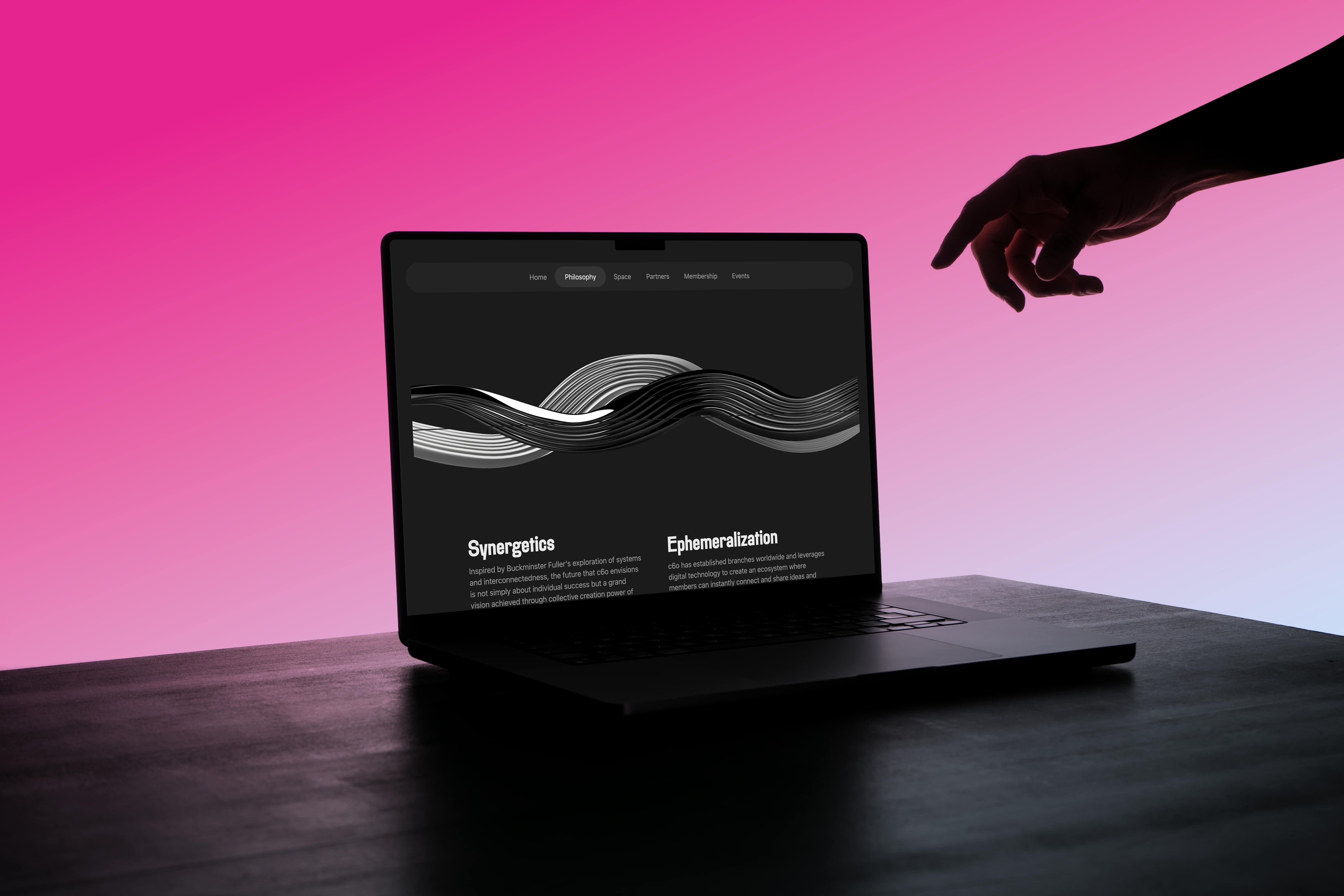
The original website introduced c6o through its philosophy, atmosphere, membership model, and events without disclosing the parts of the experience intended only for members. I treated privacy as an information-architecture decision: public pages created context and interest, event communications revealed only what attendees needed, and member channels carried access and operational details. A complementary event property gave individual gatherings a focused home without turning the main website into a promotional feed.
Designing One Hierarchy in Two Languages
English and Japanese create visibly different densities, line lengths, and rhythms, especially at editorial scale. Instead of applying one type scale mechanically, I tested the two languages together and introduced an approximate 15% differential between corresponding display styles, then tuned line height and spacing by context. This kept the hierarchy balanced without treating Japanese as a secondary translation layer.
A Flexible Language for Events
Events needed distinct personalities without making c6o look like a different brand every week. I built a modular campaign framework from fixed typographic relationships, repeatable information zones, monochrome foundations, and a controlled layer of event-specific color. Pixel animation, custom motion, 3D assets, and changing compositions created variation across social posts, invitations, event pages, and venue screens while preserving a recognizable source.
Extending the Brand Into Access and Operations
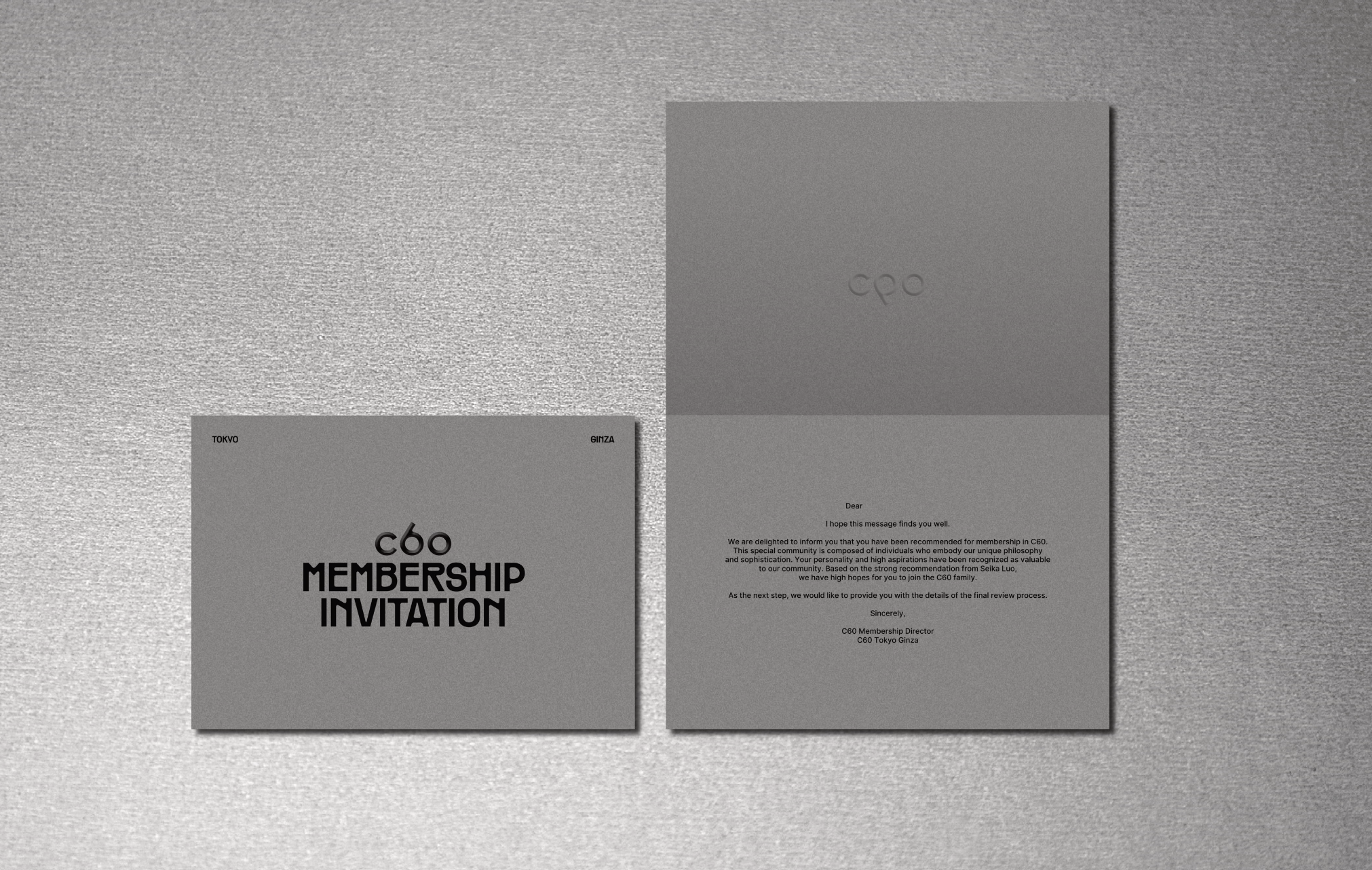
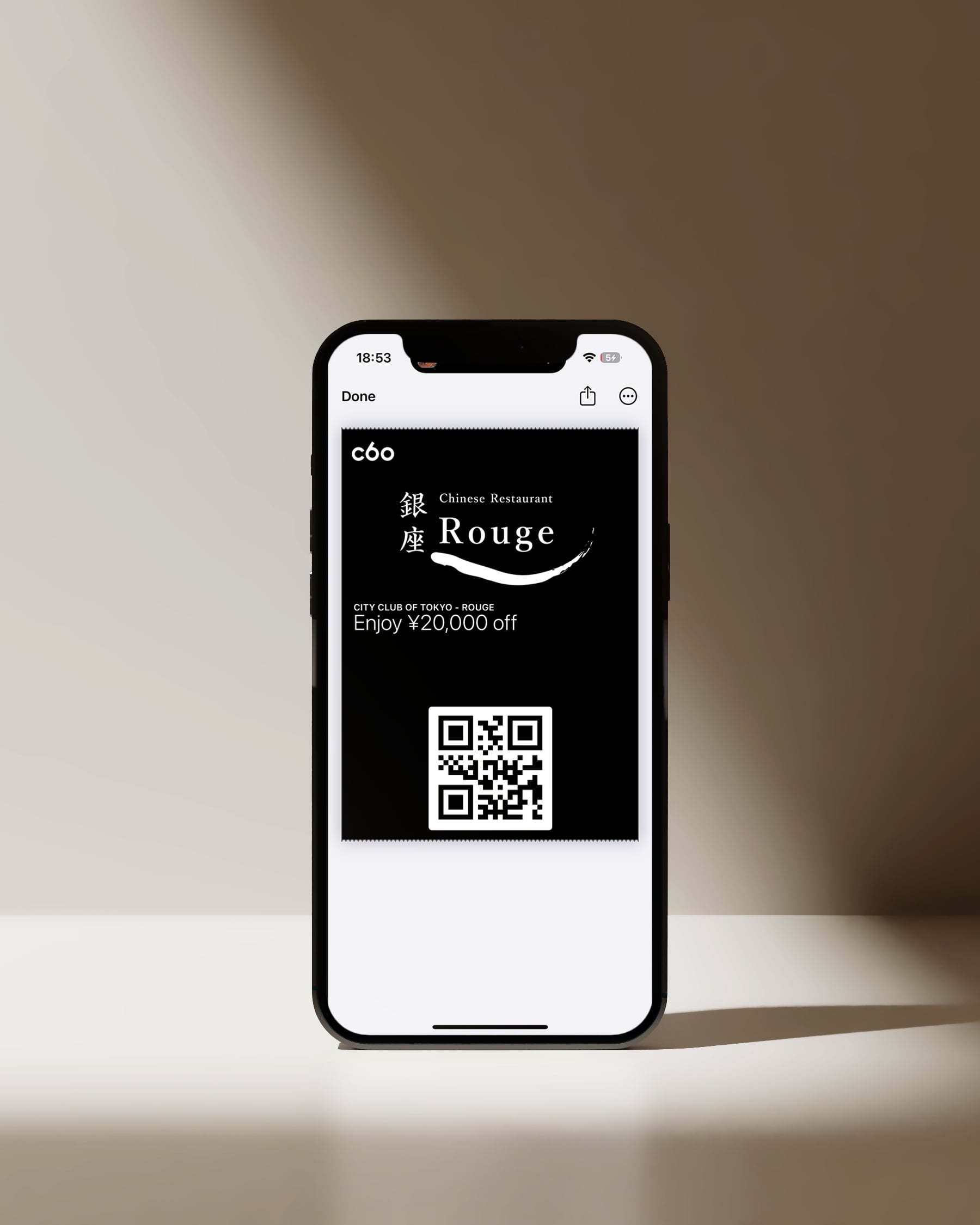
The members-only experience had to remain coherent after someone left the website. I designed branded wallet passes, invitation and confirmation states, and the workflows surrounding the venue's fingerprint-access system. Behind those touchpoints, I developed a custom membership database and CRM workflow for profiles, access status, attendance, and engagement. Working across both the visible brand and its operational layer let me resolve gaps in the experience at the system level.
02 — Opening c6o to the Public
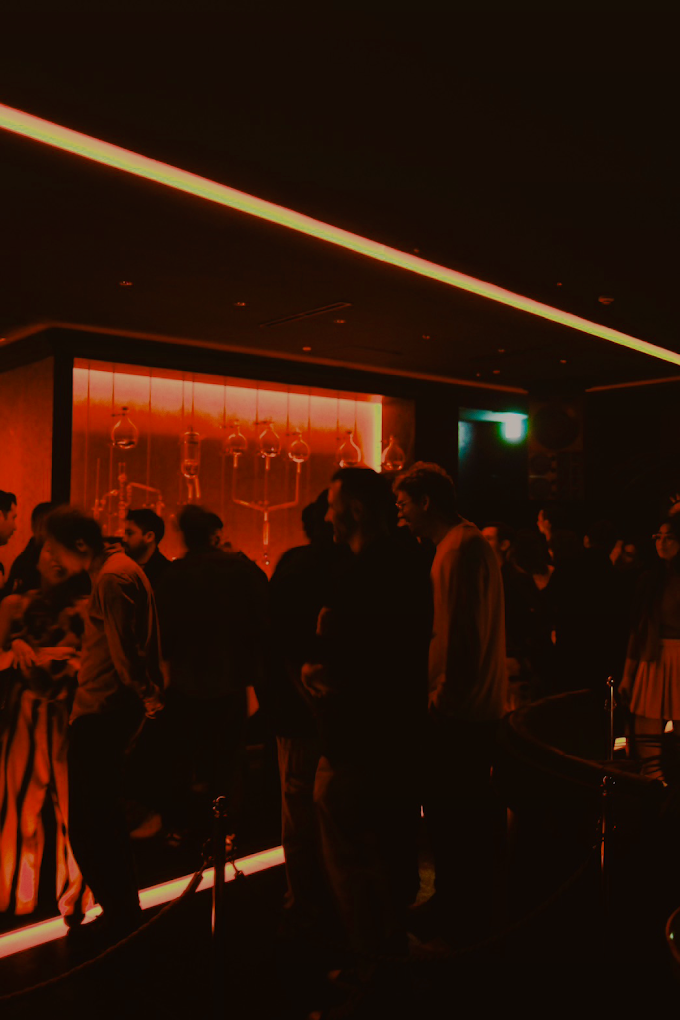
When c6o moved beyond its members-only model, the brand needed to welcome a wider audience without becoming generic. The new direction reframed it as an intimate Ginza bar shaped by atmosphere, design, and sensory precision—a place for first-time guests and regulars, while retaining a quieter layer for its member community. This shift changed the role of the identity, the website, and the product system around the venue.
A Warmer, More Open Identity
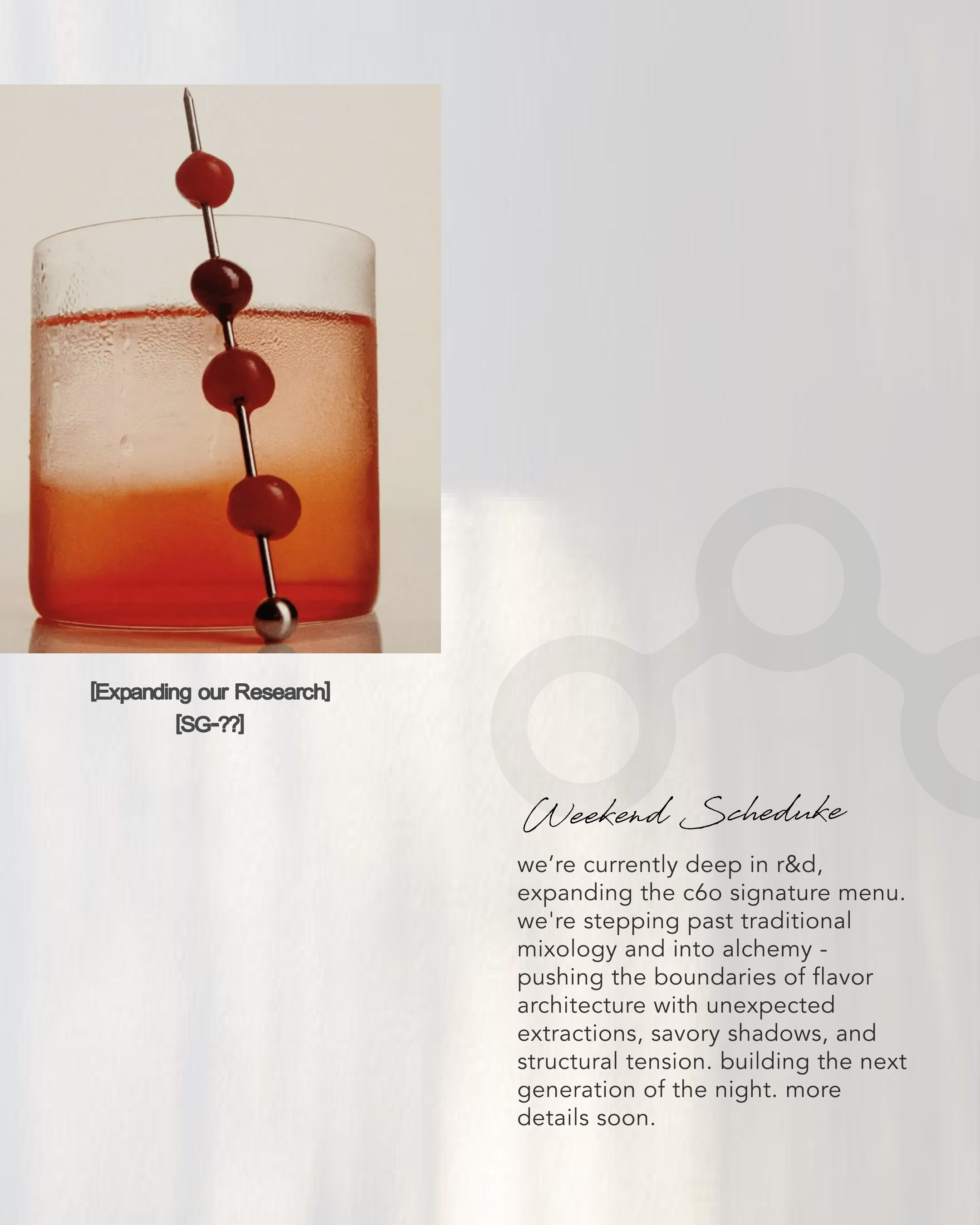
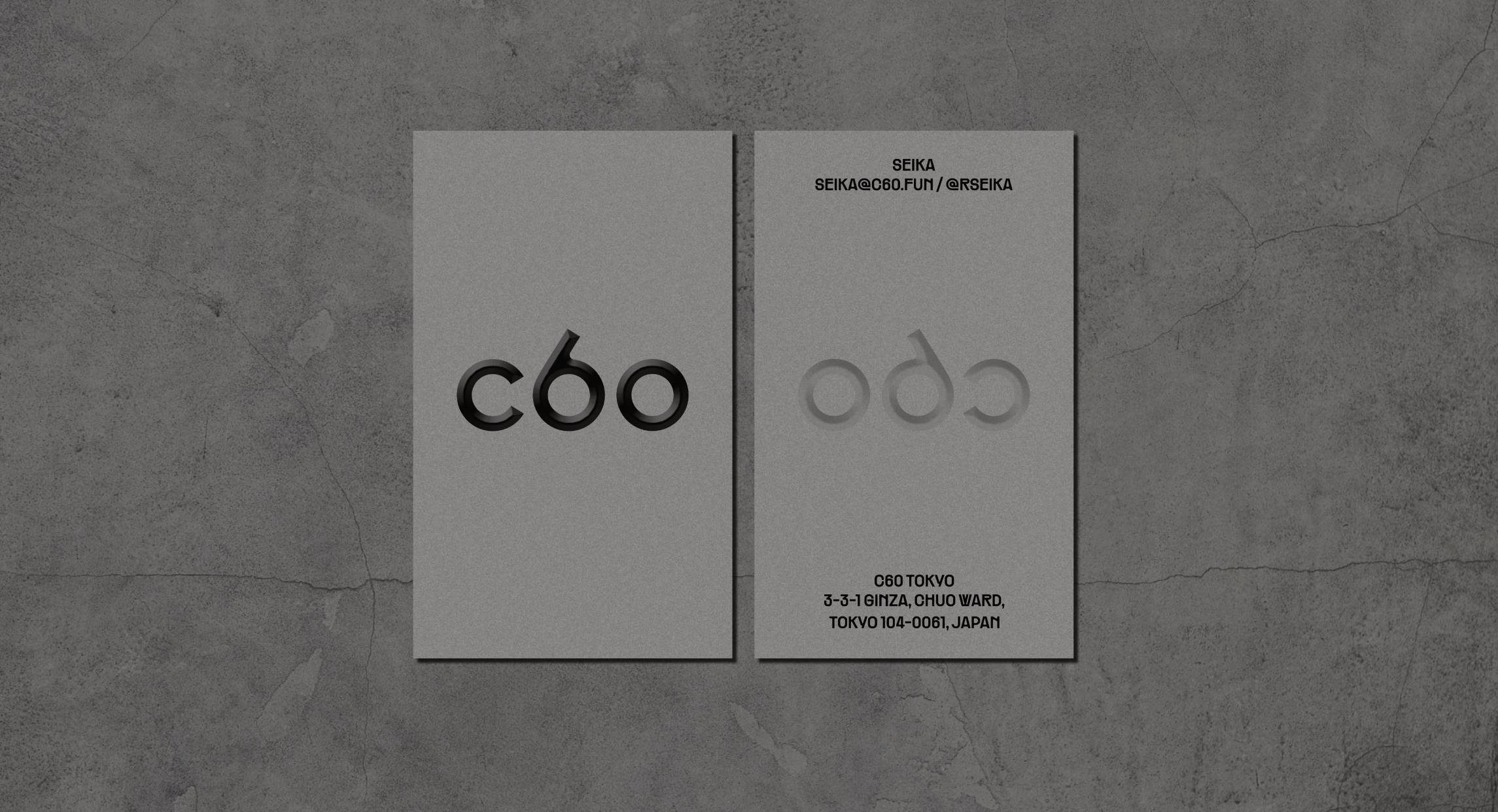
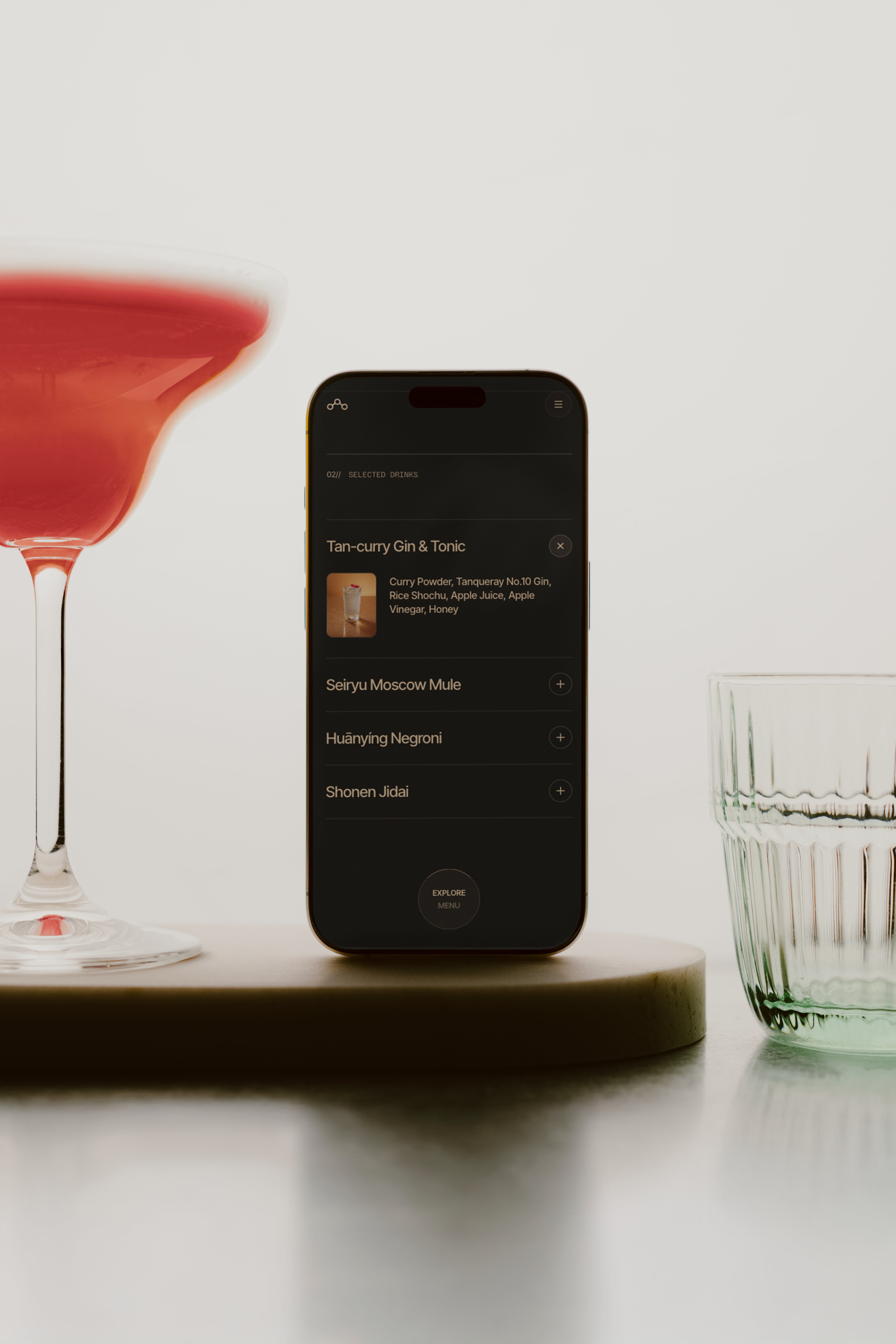
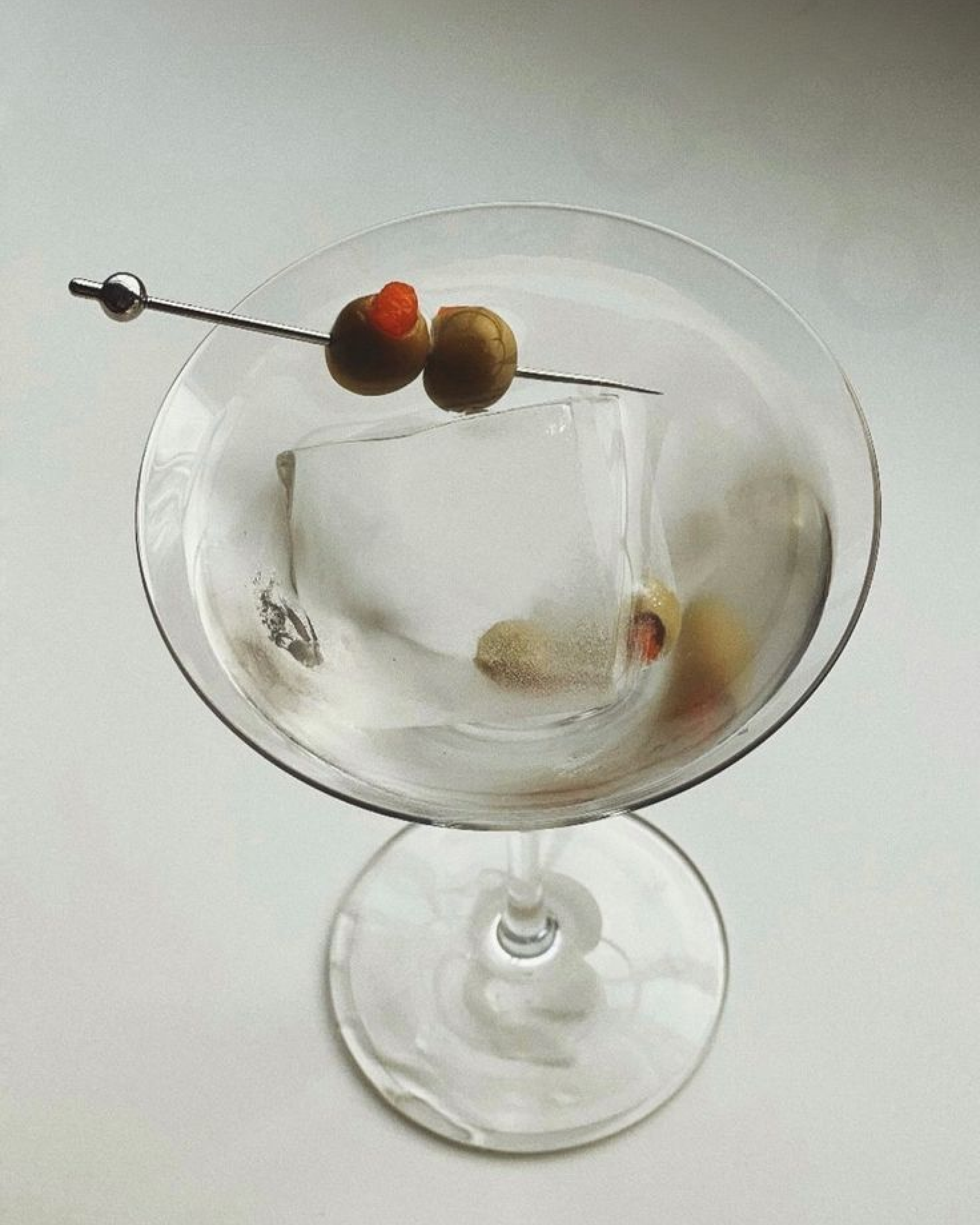
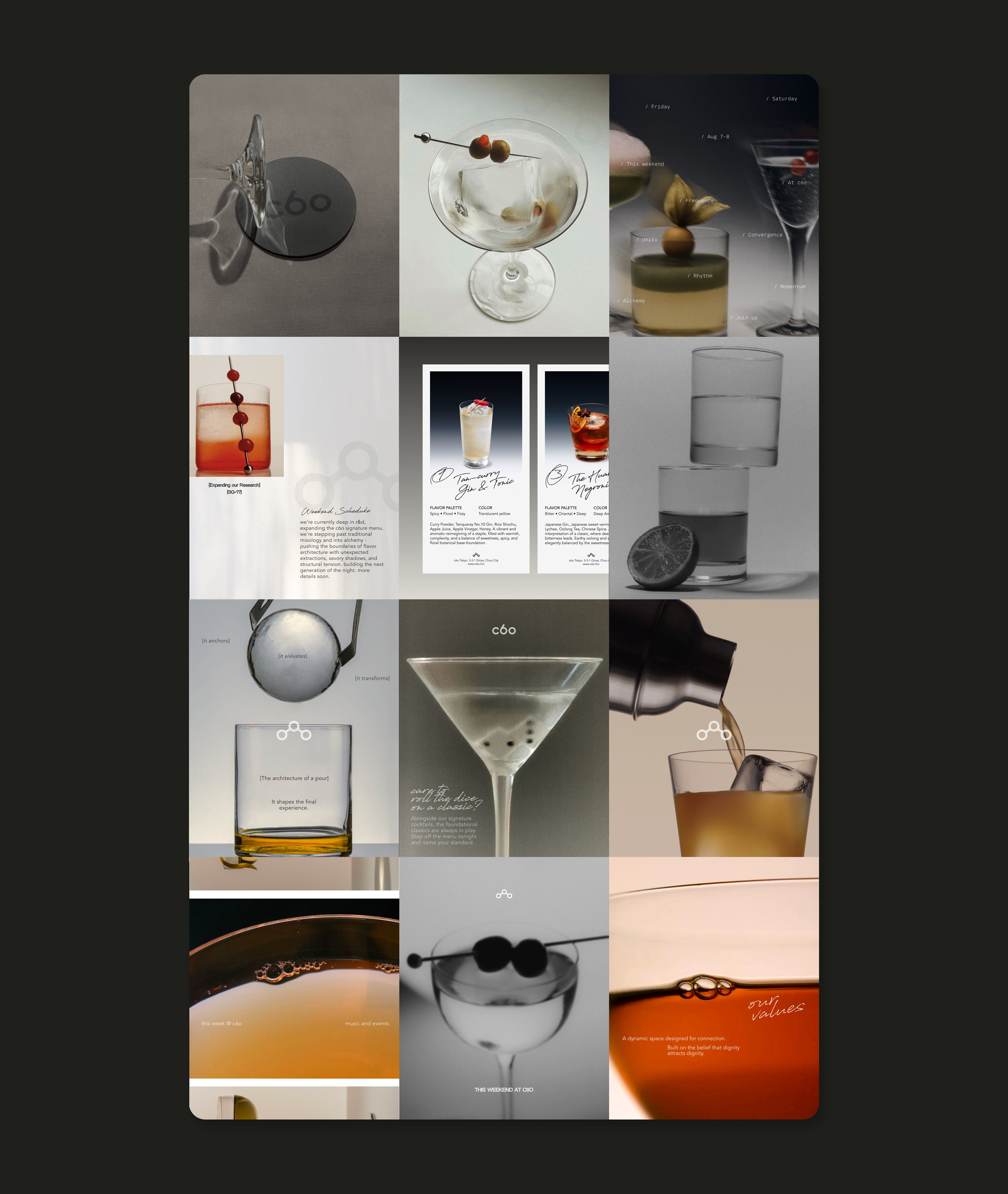
I evolved the stark original system into a warmer visual language built around the physical experience of the bar. Softer color, richer imagery, tactile materials, and more atmospheric pacing made the brand feel inviting while preserving its precision and sense of mystery. Menus, printed matter, social content, and venue graphics were redesigned as parts of the same hospitality experience rather than as separate campaign assets.

Rebuilding the Website Around the Public Experience
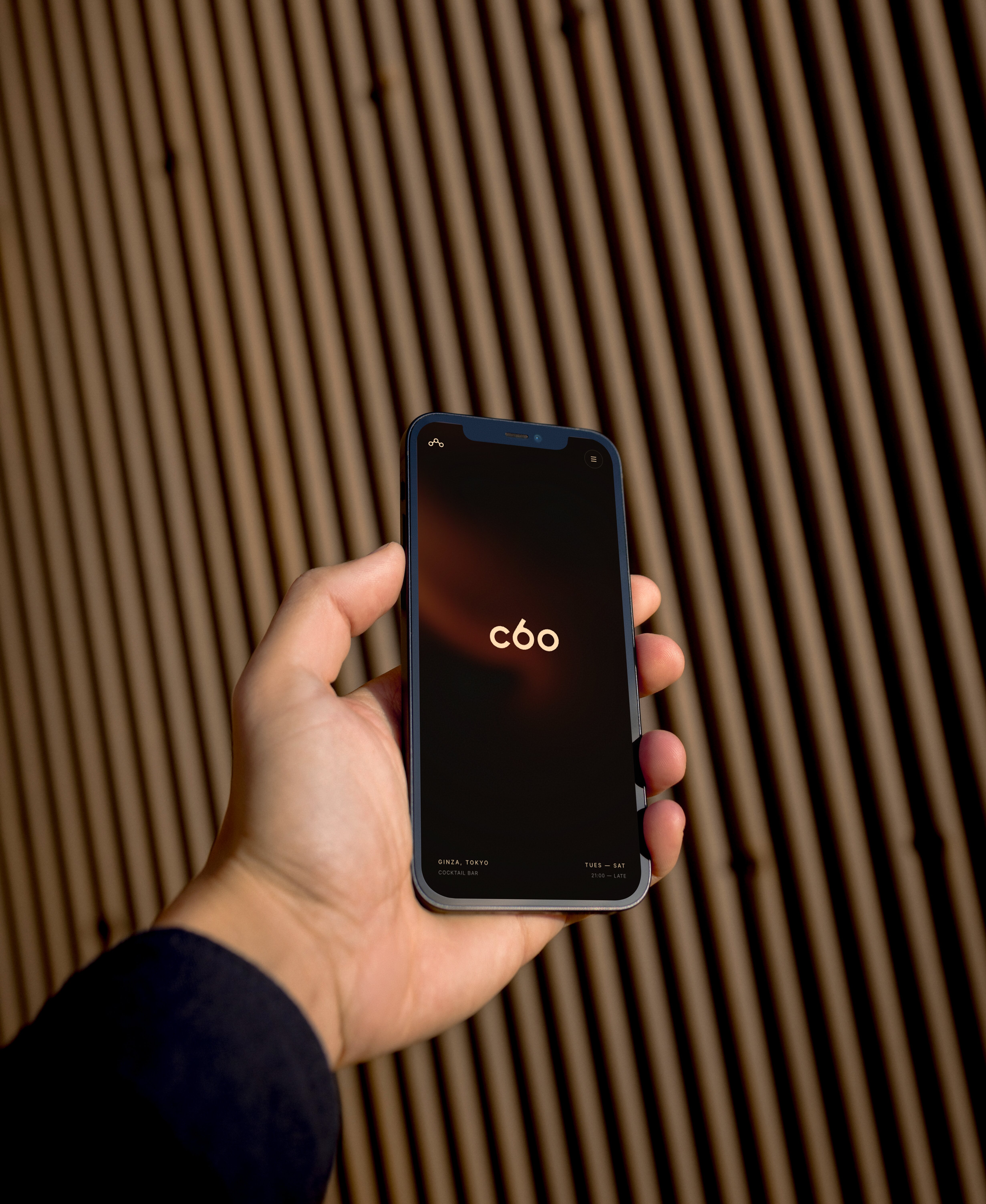
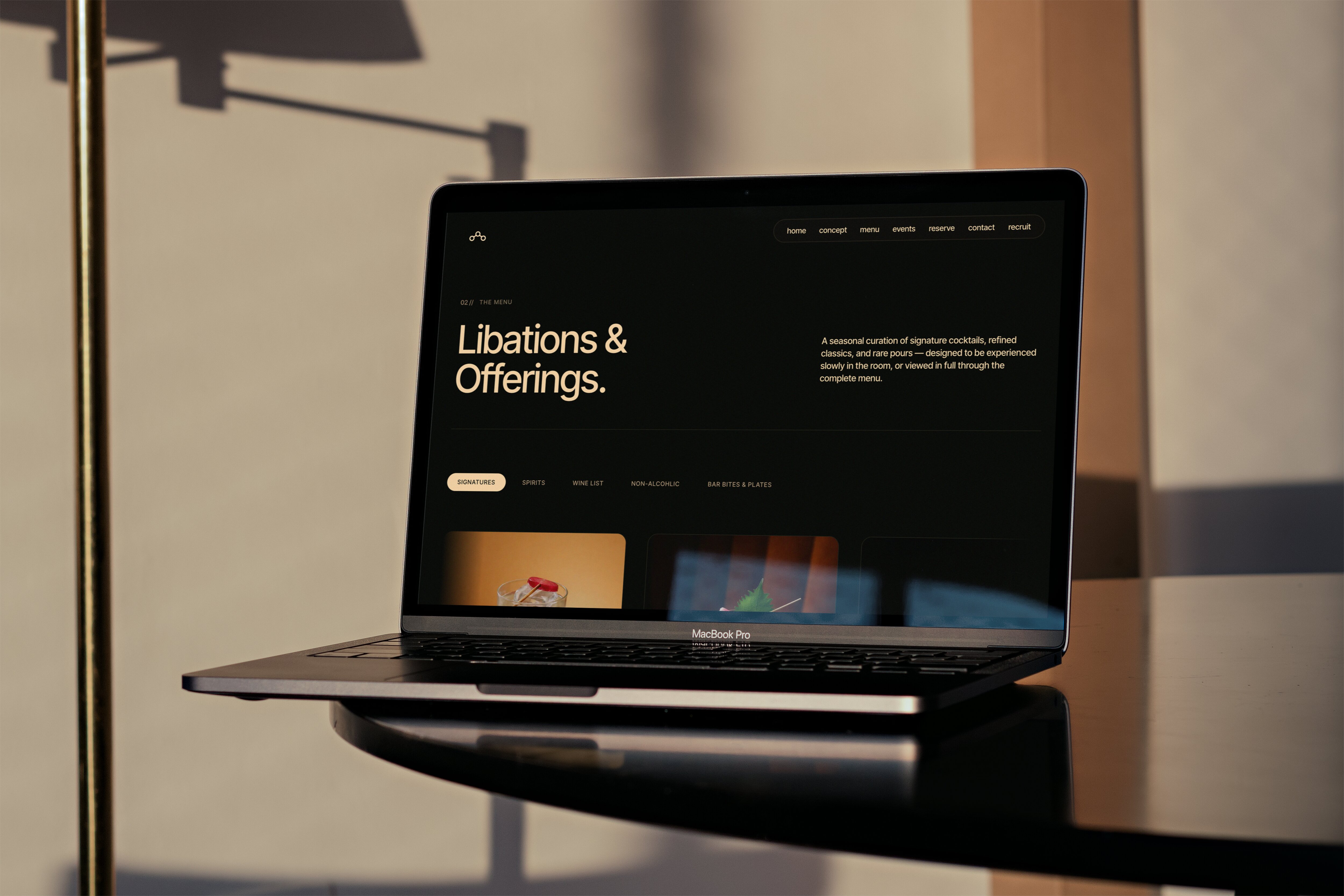
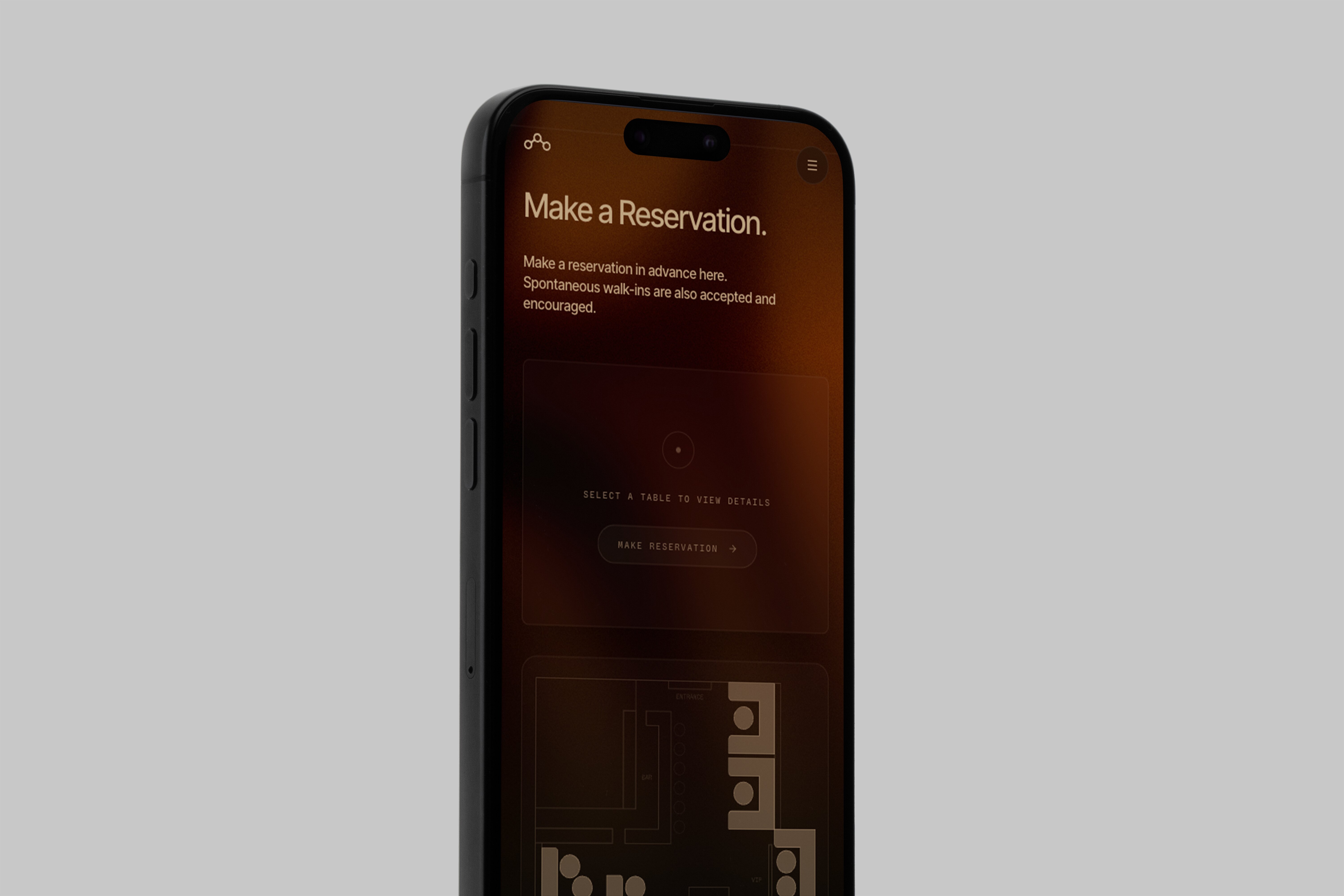
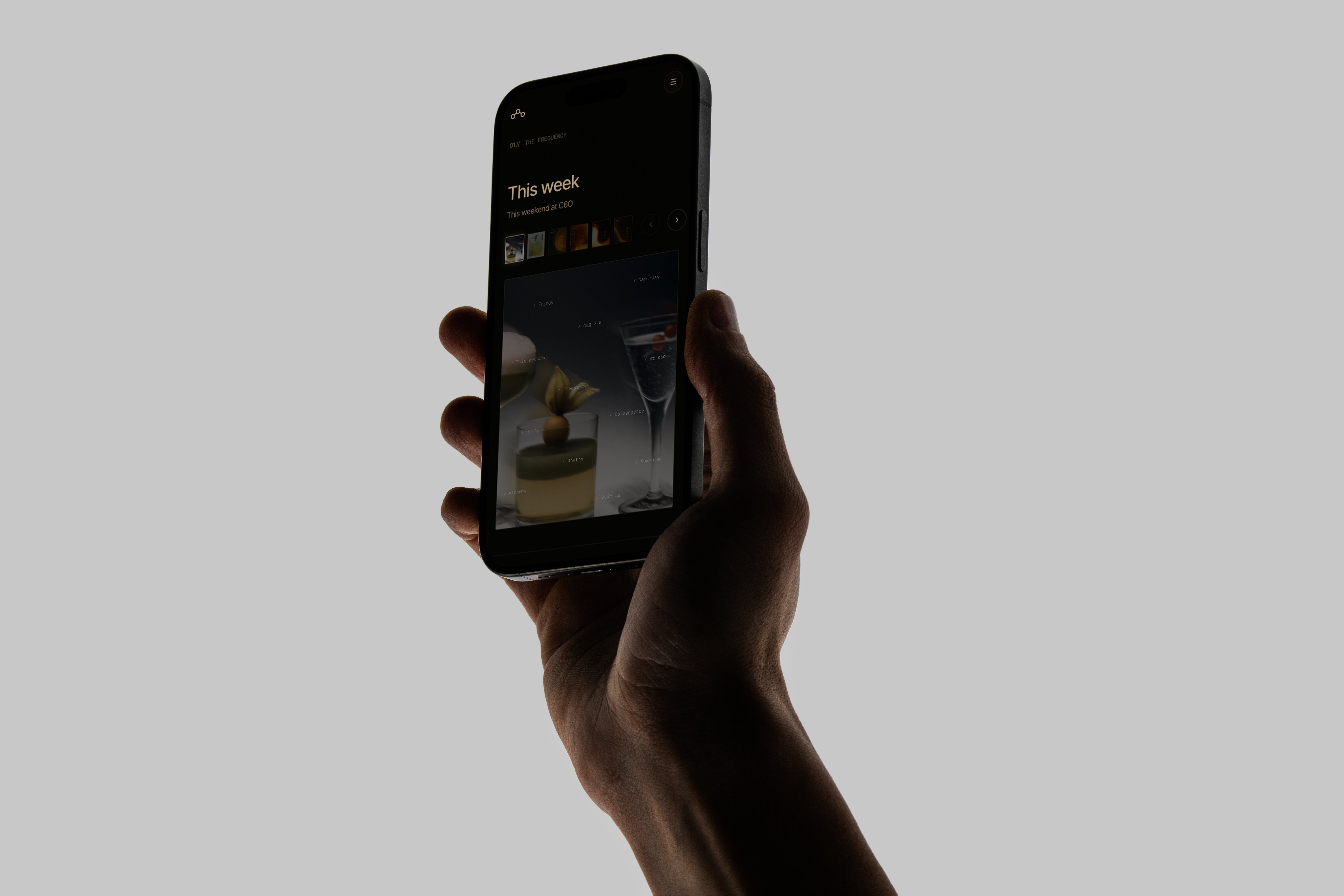
The public website no longer needed to explain exclusivity; it needed to help someone understand the place, feel its atmosphere, and decide to visit. I reorganized the experience around the bar, cocktails, space, events, and practical visit information, using motion and editorial imagery to carry the character that membership language previously supplied. The result is clearer and more welcoming without flattening c6o into a conventional hospitality site.
Developing the Members Platform
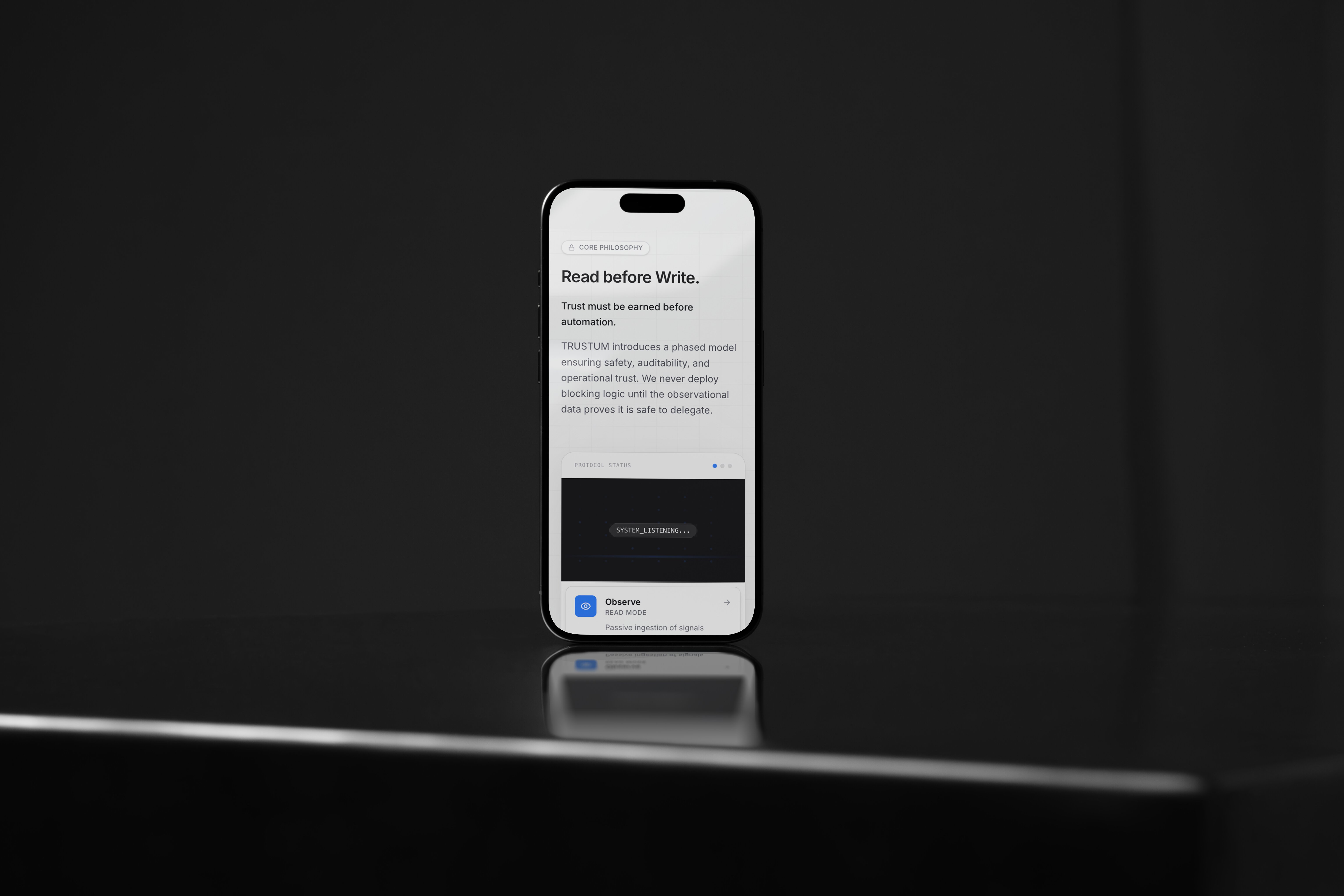
Opening the venue publicly did not remove the need for membership; it made the distinction between public hospitality and the member relationship more important. I am currently leading the design and technical development of a members system that extends c6o beyond access credentials. The product brings together member profiles, relationship signals, requests and offers, invitations, feedback, and notifications in a private environment designed around meaningful introductions rather than a conventional social feed.
The platform is being built as a native SwiftUI member app with a Next.js admin console, a TypeScript and Fastify backend, PostgreSQL as the source of truth, and dedicated worker and notification foundations. Product logic, privacy, lifecycle state, and access decisions remain backend-owned; the app focuses on the member experience. AI can assist with suggestions and drafts, but people retain approval over relationship decisions. The platform remains in active development, so this work is presented as an evolving product system rather than a launched feature set.
c6o as a Wider System of Experiences
Across both chapters, my role has moved between brand direction, interaction design, front-end development, physical touchpoints, operational tooling, and product architecture. The first era established a coherent world for a private club; the second adapted that world for public hospitality while building a more purposeful member layer behind it. Together, the work shows how a brand can change its audience and business model without discarding the system, memory, and character that made it distinct.