Trustum
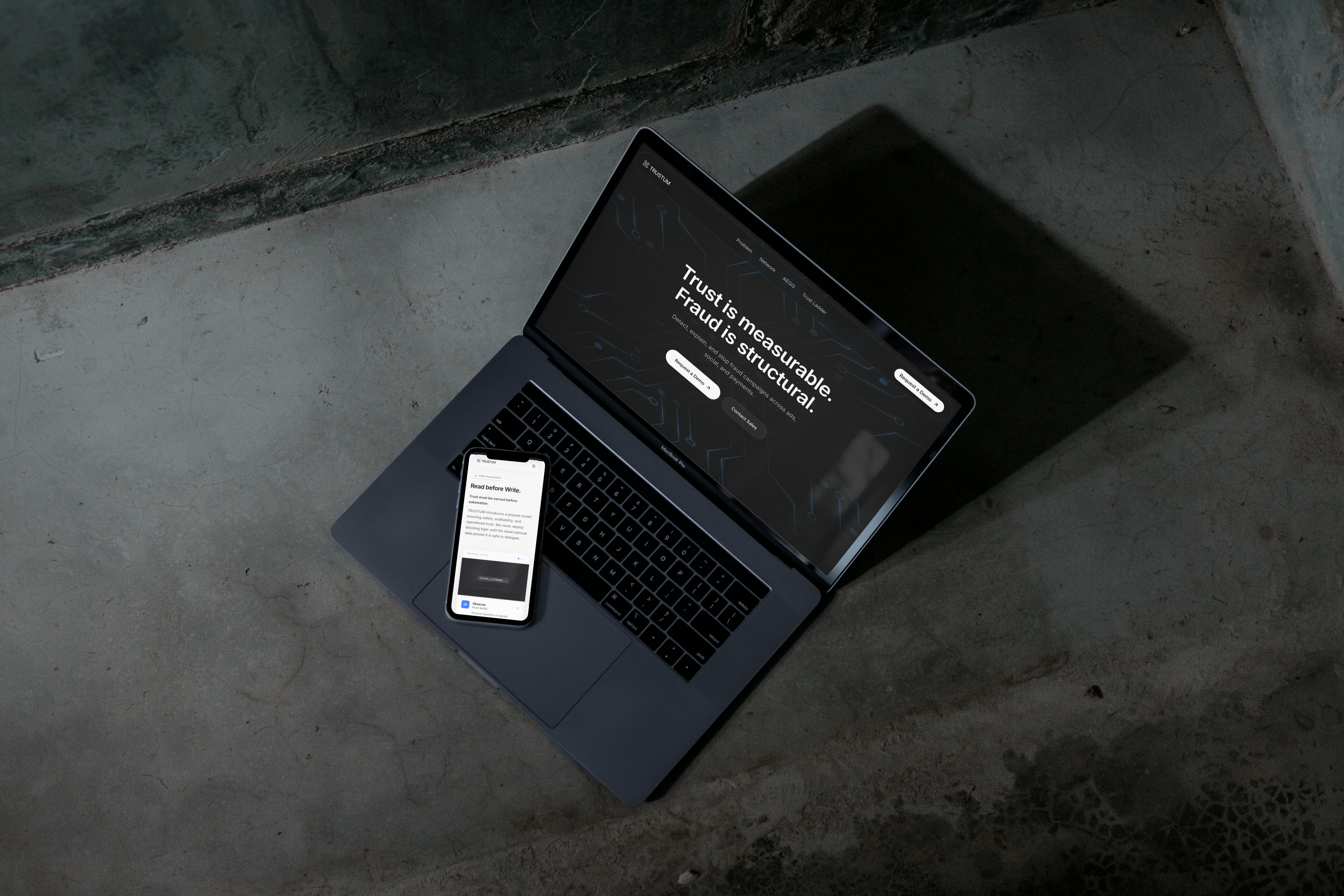
In 1.5 weeks, I created Trustum’s visual identity and launched a responsive website that turns a complex fraud-intelligence platform into a clear enterprise story—from logo and information architecture to interface design and front-end implementation.
Making an Invisible System Understandable
Trustum is building a trust-intelligence network that detects fraud as a connected campaign rather than an isolated transaction. Its platform brings together evidence validation, graph analysis, explainable risk scoring, and case operations across advertising, messaging, and payments. My role was to make that invisible infrastructure understandable—and give the company a credible identity and launch-ready website in 1.5 weeks.

The Challenge
Trustum needed to communicate technical depth without looking like another generic cybersecurity company. The website had to explain how activity across multiple channels becomes evidence of a coordinated fraud network, while still answering the questions an enterprise buyer would care about: what the system detects, why its decisions can be trusted, and how it fits into existing operations. With a short launch timeline, the identity, narrative, responsive design, and implementation also had to develop as one connected system.
Responsive Storytelling From the Start
Building the Identity and Interface Together
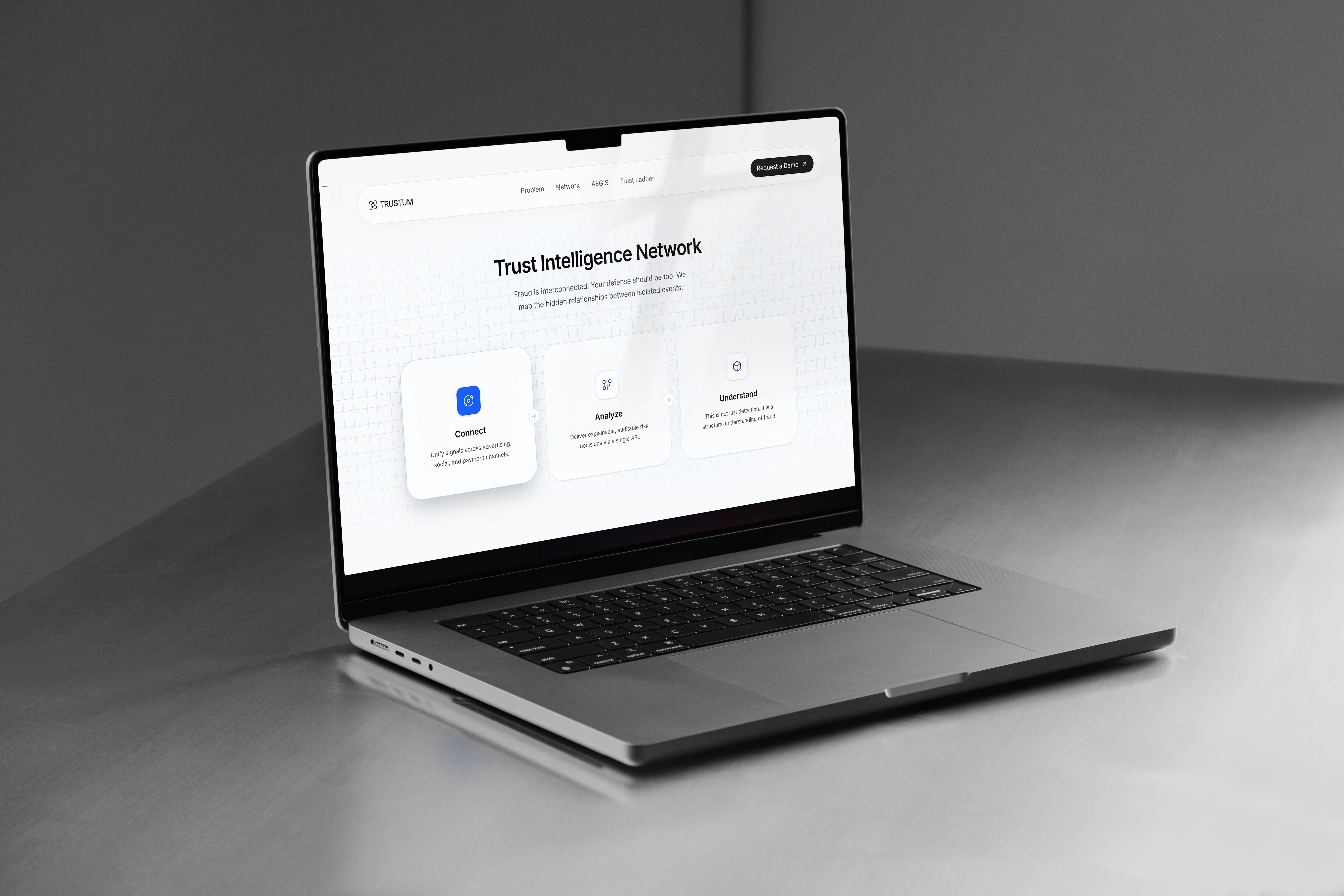
I designed the Trustum identity around structure, connection, and controlled precision. The logo avoids familiar locks, shields, and warning symbols in favor of a compact network-inspired mark that can function both as a corporate signature and as an identifier within a technical product system. That same logic extends into the website through modular layouts, wayfinding labels, restrained typography, connected diagrams, and deliberate use of contrast.
Turning Infrastructure Into a Product Story
Rather than opening with architecture diagrams or technical terminology, I structured the experience around a recognizable fraud journey: advertising, social or direct messages, closed channels, and payment. This gives visitors a concrete mental model before introducing the technology. The narrative then shows how Trustum connects those events, identifies the larger campaign, and returns an explainable decision instead of another opaque risk score.
Making the AEGIS Architecture Legible
Trustum’s core system, AEGIS, is organized around four capabilities: Verify for evidence validation, Graph for detecting connected networks, Score for explainable risk assessment, and Ops for case management and audit history. I presented these as parts of one operating system rather than four disconnected features. Repeated identifiers, structured content blocks, and network-based visuals make the architecture tangible without turning the marketing site into a simulated product dashboard.
Using Responsible Automation as a Differentiator
One of the strongest ideas in the product is that operational authority should be earned. The AEGIS Trust Ladder moves integrations through three stages: Observe, Recommend, and Execute. I made this progression a central part of the website because it explains both the product’s capability and its restraint. Trustum can begin by reading signals, progress to recommending actions, and receive narrowly controlled permission to act only after its performance has been demonstrated.
Designed and Built as One Responsive System
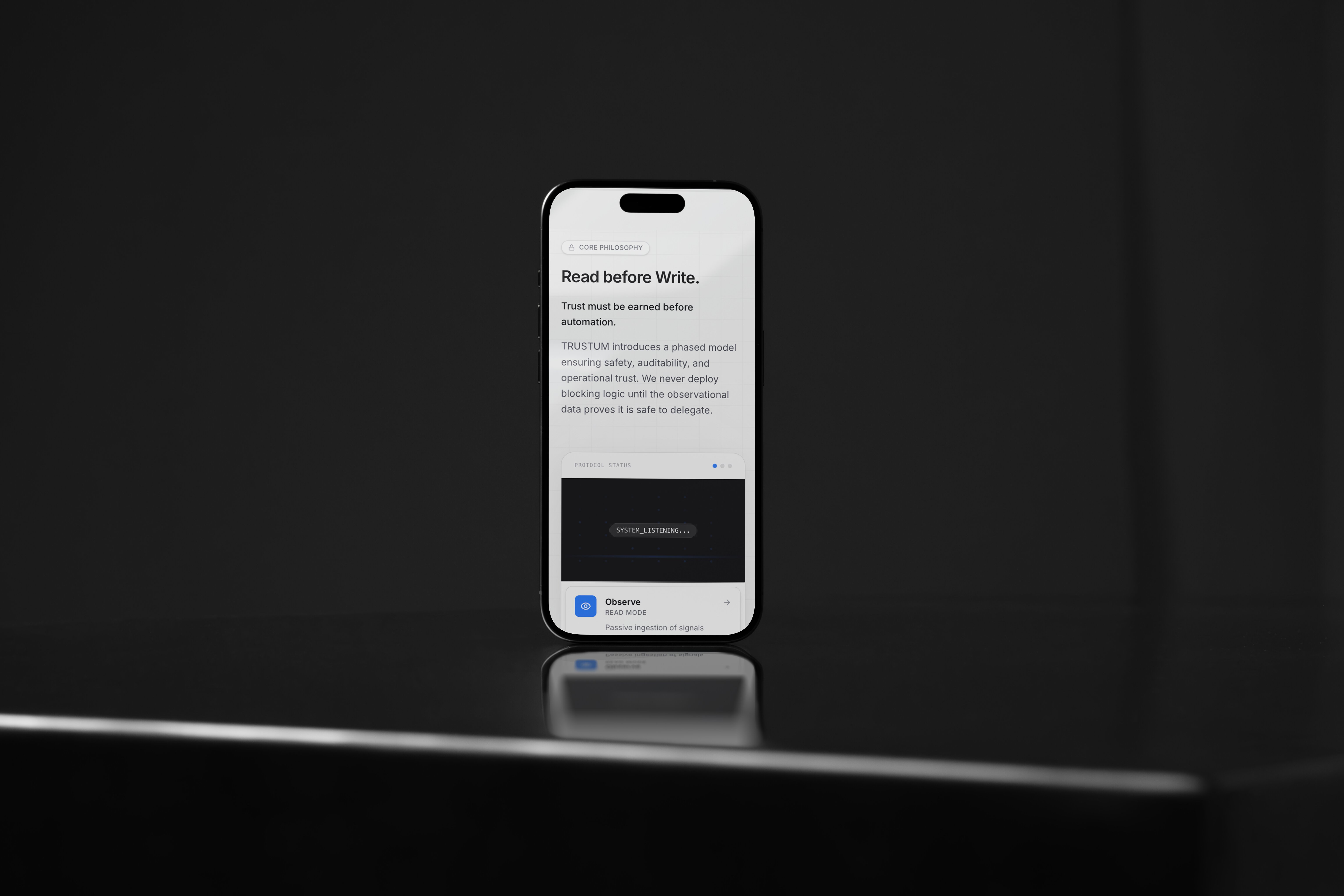
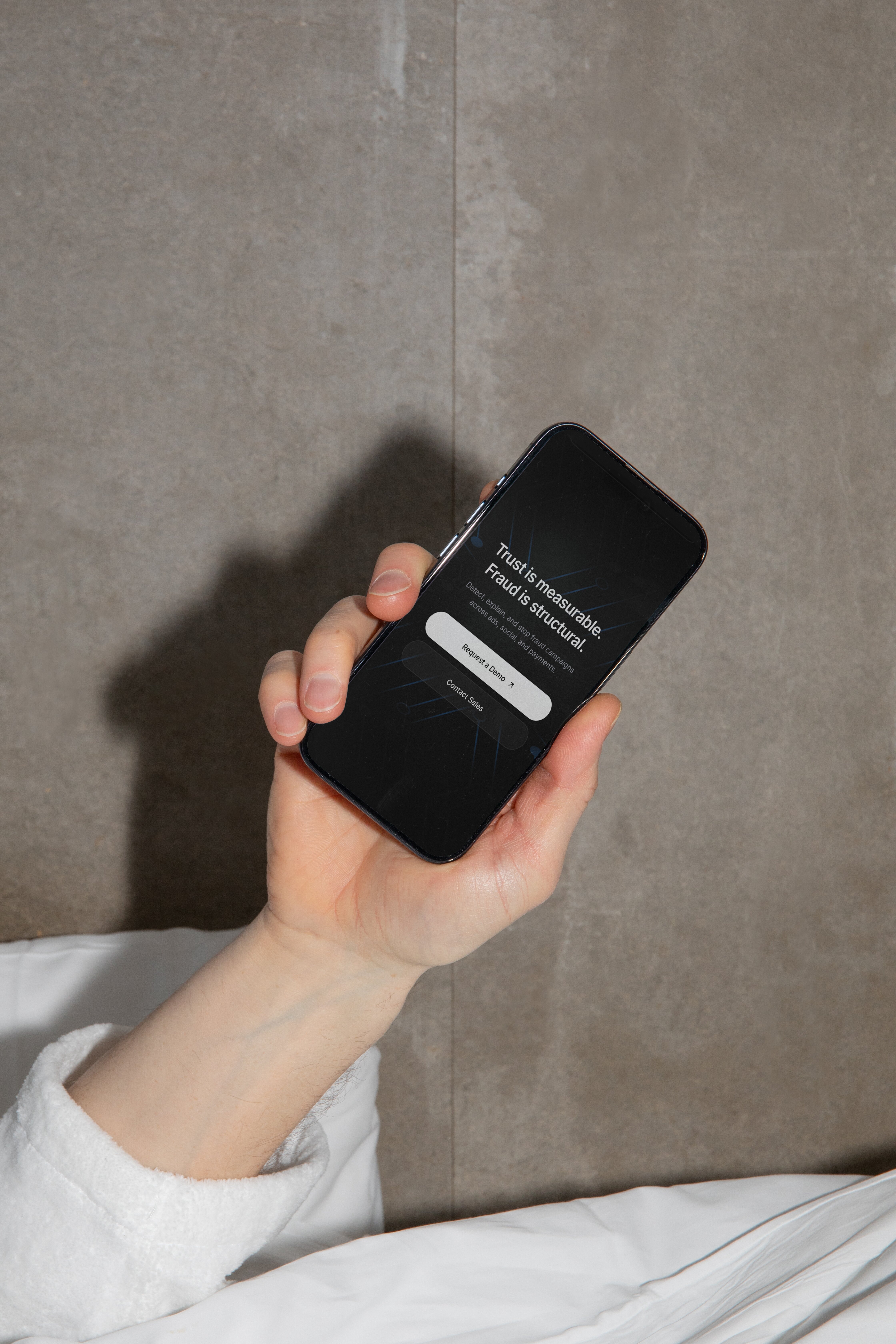
I designed and developed the production front end, carrying the visual system directly from concept into code. The responsive experience was not treated as a reduced desktop layout: diagrams, content density, navigation, typography, and section pacing were reconsidered for narrow screens. Working across design and implementation allowed me to refine hierarchy, motion, and responsive behavior together instead of losing the original concept during handoff.
Outcome
The finished work gave Trustum a cohesive public identity and a live enterprise website within 1.5 weeks. The project brings together brand strategy, technical product positioning, information architecture, responsive interface design, and front-end development in a single launch system. Most importantly, it makes a difficult proposition feel concrete: fraud operates across connected systems, risk decisions should remain explainable, and automation should expand only as trust is established.